Garage door opener problems rank among the most disruptive issues a homeowner can face. A garage door opener not working leaves you locked in or out with no easy solution. Garage door opener motor problems can develop slowly or fail without warning. A garage door opener that will not open the door puts strain on the entire system with every attempt. Knowing the signs of garage door opener problems early helps you fix a garage door opener issue before it becomes a full motor failure. This guide covers every major cause of a garage door opener not working, walks through your garage door opener repair options, and explains when garage door opener replacement delivers better long-term value than continuing to repair an aging unit.
How a Garage Door Opener Works
A garage door opener is a motorized drive unit mounted to the ceiling of the garage. It moves the door along its tracks through a trolley connected to the door by a drive arm. The three main drive types each have specific strengths and failure patterns.
A chain drive opener uses a metal chain to pull the trolley along the rail. It is the most common and least expensive type but also the noisiest. A belt drive opener uses a reinforced rubber belt for quieter operation. A screw drive opener rotates a threaded steel rod to move the trolley and has fewer moving parts than the other two. All three types share the same core components: a motor, a logic board, limit switches, force adjustment settings, and a safety sensor circuit. Garage door opener problems can develop in any of these systems.
Garage Door Opener Will Not Open: Common Causes
A garage door opener that will not open the door has several possible causes. Working through them in order saves time and avoids unnecessary service calls.
Power and remote issues
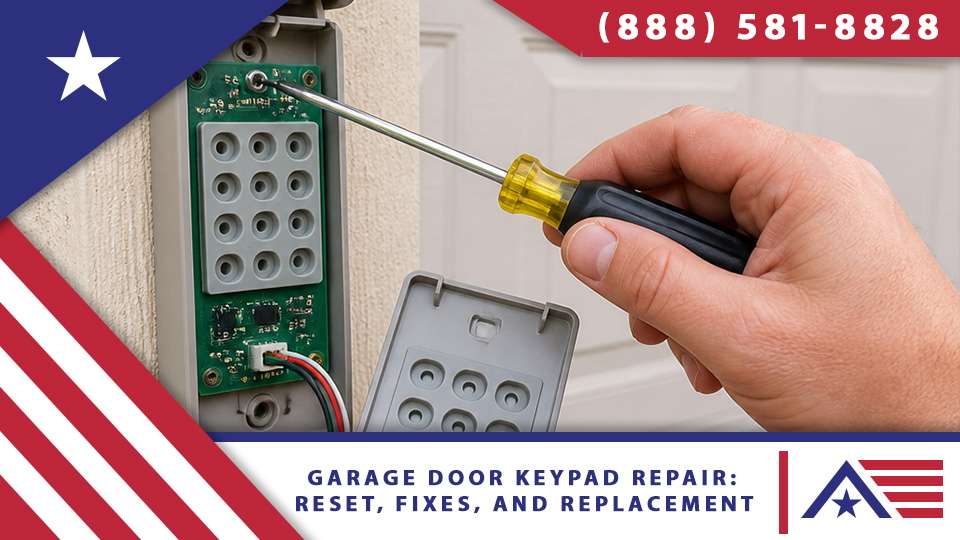
Before assuming a mechanical failure, check the basics. Confirm the opener is plugged in and the outlet has power. A tripped GFCI outlet on the same circuit cuts power to the opener without any visible sign of failure. If power is confirmed, replace the remote batteries. Dead batteries account for a significant share of garage door opener not working calls. If the wall button operates the door but the remote does not, the problem is the remote or its programming rather than the opener itself. A battery swap or reprogramming resolves this without any service visit.
Disconnect switch engaged
Every garage door opener has a red emergency disconnect cord hanging from the trolley. Pulling this cord disengages the trolley from the drive so the door can move manually during a power outage. When someone pulls this cord accidentally, the motor runs but the door does not move. This is one of the most common causes of a garage door opener that will not open. Pull the cord toward the door to re-engage the trolley and restore normal operation.
Limit switch miscalibration
Limit switches tell the opener how far to travel in each direction before stopping. When these switches drift out of calibration, the opener stops the door before it fully opens, reverses immediately after closing, or fails to recognize that the door has reached the correct position. An opener not responding correctly to close commands almost always points to limit switch adjustment. Most openers allow this adjustment through controls on the motor unit. The owner’s manual covers the specific procedure for each model.
Safety sensor fault
Photo-eye safety sensors mount near the floor on each side of the door. They project an infrared beam across the opening. If anything interrupts that beam, the opener refuses to close the door. Dirty lenses, physical misalignment, or a sensor knocked out of position creates a fault that prevents closing. One of the indicator lights on the opener unit blinks when a sensor fault is active. Cleaning the lenses and realigning the sensors until both indicator lights show solid resolves this problem in most cases without tools.
Pro tip: Count the blinks on the opener motor unit when a fault is active. Most opener manuals include a blink code chart that identifies the specific fault, which makes diagnosis faster and more accurate.
Garage Door Opener Motor Problems: Signs and Causes
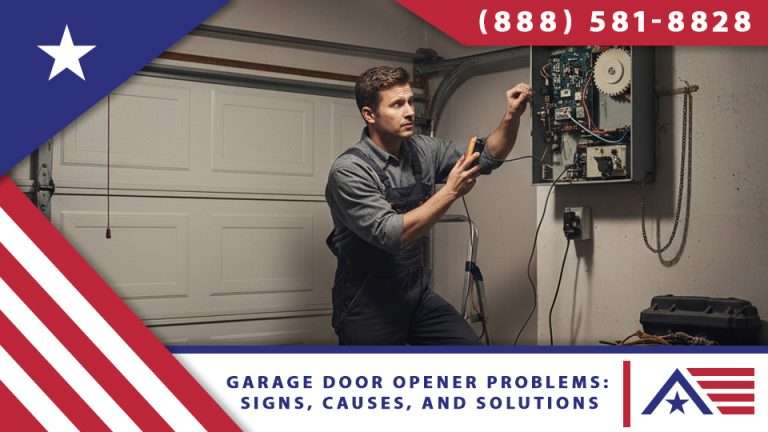
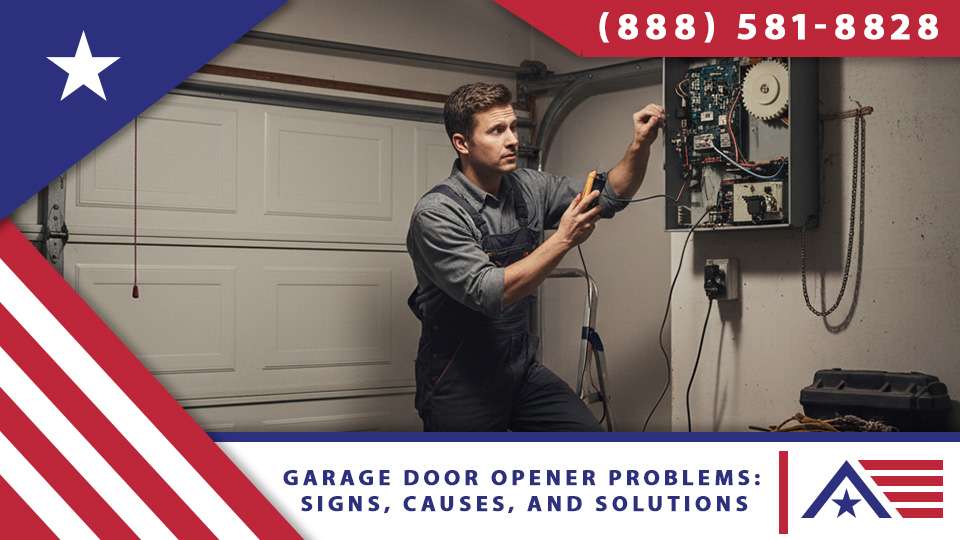
Garage door opener motor problems are among the more serious garage door opener issues because the motor drives every other function. When the motor fails, no remote reprogramming or sensor adjustment restores operation.
Signs of garage door motor failure
The motor runs but the door does not move. A motor that runs without moving the door usually has a stripped drive gear. Garage door opener motor problems involving a stripped gear are common in chain drive and direct drive units over seven years old. The stripped gear spins freely inside the housing without engaging the drive mechanism.
The motor hums but does not start. A humming motor that fails to turn over has a failed capacitor. The capacitor provides the electrical surge the motor needs to begin rotating. Capacitor replacement is a relatively low-cost garage door opener repair that restores full operation without replacing the entire unit.
The motor overheats and shuts off repeatedly. Openers include thermal overload protection that shuts the motor down when it runs too hot. Frequent thermal shutdowns indicate the motor works harder than it should. An unbalanced door is the most common cause. The opener compensates for a heavy side by straining the motor on every cycle. Addressing the door balance corrects the root cause of the garage door opener motor problem.
Grinding or straining sounds from the motor unit. These sounds indicate the drive gear is wearing down or debris has entered the drive mechanism. Continuing to operate the opener in this condition accelerates the damage and increases repair costs.
Safety warning: Never open or service the interior of the opener motor unit without unplugging it first. The capacitor inside holds a dangerous electrical charge even after the unit loses power. Internal motor repairs always require a qualified technician.
Garage Door Opener Repair: What You Can Fix Yourself
Many garage door opener problems are within reach for a confident homeowner. These tasks are safe and do not require professional tools.
- Replacing remote and keypad batteries
- Reprogramming remotes and keypads
- Cleaning and realigning safety sensors
- Re-engaging the disconnect trolley after emergency release
- Adjusting limit switches through the motor unit controls
- Adjusting the opener’s force sensitivity settings
- Lubricating the chain or screw drive with a garage-door-specific lubricant
- Tightening loose hardware on the rail and bracket mounts
These steps resolve a large share of garage door opener not working complaints without a service call. Work through power and remote checks first, then move to sensor inspection, and then check limit and force settings before concluding the motor itself has failed.
When to Call a Professional for Garage Door Opener Repair
Some garage door opener problems require professional diagnosis and repair. Contact a technician when:
- The motor runs but the drive gear is clearly stripped
- The opener hums but will not start despite confirmed power supply
- The logic board has failed and shows erratic behavior or error codes that will not clear
- The opener trips thermal overload repeatedly because of a door balance problem
- The unit is more than 10 to 15 years old and needs multiple repairs in a short period
A professional technician diagnoses garage door opener motor problems, replaces internal components where cost-effective, and gives you an honest comparison of garage door opener repair cost versus garage door opener replacement value.
Garage Door Opener Replacement: When It Makes More Sense Than Repair
Garage door opener replacement becomes the better investment when the unit is old, when repairs approach or exceed the cost of a new unit, or when the existing opener lacks modern safety and convenience features.
Age over 10 to 15 years. Older openers lack rolling code security technology, which means they are vulnerable to code capture by anyone with the right equipment. Modern openers generate a new code with every use. Older units also lack battery backup, smart home integration, and improved sensor systems that newer models include as standard features.
Repair cost exceeds 50% of replacement cost. A logic board or motor replacement on an older unit can reach $150 to $300 in parts alone. A new mid-range opener installed professionally typically costs $300 to $500 total with a manufacturer warranty of one to three years.
No battery backup. Power outages are the most common reason homeowners get stuck with a car trapped inside the garage. Modern openers include battery backup as a standard feature. If your unit lacks it and is aging, garage door opener replacement is a practical upgrade rather than just a repair decision.
Loud chain drive operation. Replacing an aging chain drive opener with a belt drive or direct drive unit eliminates the noise. This quality-of-life improvement makes garage door opener replacement worthwhile even before the old unit fully fails.
Pro tip: When scheduling garage door opener replacement, ask your technician to perform a full door balance and hardware inspection at the same time. Installing a new opener on a door with spring or cable issues shortens the new opener’s service life significantly.
Preventing Garage Door Opener Problems
A consistent maintenance routine reduces how often garage door opener problems develop and extends the service life of the unit.
- Lubricate the drive mechanism every six months. Apply a lithium or silicone-based lubricant to the chain, belt, or screw drive. Avoid household oils that attract dirt and accelerate wear.
- Test the safety sensors monthly. Place an object in the door’s path and attempt to close the door. The opener should reverse immediately. A sensor that fails this test needs cleaning or realignment before the next use.
- Test the auto-reverse force setting. Place a 2×4 flat on the ground in the door’s path and close the door. The door should reverse when it contacts the board. If it does not, the force setting needs adjustment by a technician.
- Inspect the drive mechanism for wear. Look for a stretched chain, fraying belt, or cracked plastic trolley carriage on a screw drive unit. Catching these before they fail prevents the more expensive repairs that follow a full failure.
- Keep the rail and hardware tight. Vibration from daily operation loosens bolts on the rail brackets and trolley carriage. Retighten these annually to prevent noise and misalignment that stress the motor.
Fix Garage Door Opener Problems Before They Leave You Stranded
Garage door opener problems do not resolve on their own like garage opener won’t open. A garage door opener that will not open the door because of a minor sensor fault today becomes a full motor failure if the root cause goes unaddressed. Garage door opener motor problems that develop from a door balance issue burn out a replacement unit just as fast as the original if the balance issue is not corrected. Whether you need a quick garage door opener repair, a motor assessment, or full garage door opener replacement when opener not responding, acting early always costs less than waiting for a complete failure.
US Garage Repair is ready to diagnose and fix garage door opener problems of any kind like garage opener won’t open quickly and safely. Contact us today to schedule a service visit and get your opener working reliably again.
Phone: (888) 581-8828
Email: info@us-garagedoorrepair.com
Website: https://www.us-garagedoorrepair.com/