Garage door lubrication problems cause grinding sounds, jerky movement, and accelerated wear on every moving component in your system. Identifying garage door lubrication issues early prevents the costly spring, roller, and hinge replacements that result from metal-on-metal friction. Understanding garage door lubricant types helps you choose the right product for each moving part on your door. Furthermore, knowing the best lubricant for garage door components prevents you from using products that attract dirt or damage rubber seals. Knowing how to lubricate a garage door properly ensures every critical contact point receives the right amount in the right location. In addition, following a garage door lubrication guide keeps your system quiet and smooth with just minutes of effort twice per year. Dry garage door parts wear out dramatically faster than lubricated ones because friction generates heat and strips metal with every cycle.
Likewise, an unlubricated garage door develops problems that mimic more serious mechanical failures and lead to unnecessary repair calls. If your door sounds rough or moves with resistance, search for garage door lubrication problems near you to get professional maintenance and to pick out garage door lubricant types.
Why Garage Door Lubrication Matters
Every time your garage door opens and closes, dozens of metal components move against each other under the full weight of the door. Specifically, proper lubrication reduces the friction that destroys parts and creates noise.
Here is why lubrication is critical to your garage door system:
- Springs wind and unwind under extreme tension with metal coils rubbing together
- Rollers spin inside the track channel thousands of times per year
- Hinges pivot at every panel joint during each open and close cycle
- The opener chain or screw drive moves against metal guides continuously
- Bearing plates and drums rotate under the full torsion load of the springs
- Without lubrication each contact point generates friction heat and metal wear
Because your door cycles approximately 1,500 times per year, dry garage door parts accumulate significant wear in a short time. Therefore, regular lubrication is the single most effective maintenance task you can perform for your garage door.
Signs of Garage Door Lubrication Problems
Garage door lubrication issues produce specific symptoms that are easy to identify during normal use. Furthermore, these warning signs tell you exactly which components need attention.
Here are the most common signs of garage door lubrication problems:
- Grinding or scraping sounds during operation especially from the springs and rollers
- Also, squeaking or squealing from hinges as panels fold at the curved track section
- Furthermore, the door moves with jerky or hesitant motion instead of smooth travel
- Visible rust developing on springs, hinges, or roller stems
- Additionally, the opener motor strains or sounds louder than usual
- Black dust or metal shavings on the floor beneath the tracks and springs
- Energy bills increasing because the opener works harder against friction
- Finally, the door vibrates excessively during travel
An unlubricated garage door often produces sounds that homeowners mistake for broken springs or worn rollers. Consequently, lubrication should always be the first troubleshooting step before scheduling a repair call.
Garage Door Lubricant Types Explained
Understanding garage door lubricant types prevents you from using the wrong product on your door. Furthermore, knowing the best lubricant for garage door components protects your parts and delivers lasting results.
White lithium grease White lithium grease is the best all-purpose garage door lubricant for metal-on-metal contact points. Furthermore, it adheres to surfaces, resists water washout, and provides long-lasting protection. In addition, it works well on springs, hinges, roller bearings, and lock mechanisms.
Silicone-based spray lubricant Silicone spray works well on tracks, weatherstripping, and rubber components where grease would attract debris. Furthermore, it does not collect dust like petroleum-based products. However, silicone spray does not provide the lasting protection that lithium grease offers for high-friction metal parts.
Garage door specific lubricant Several manufacturers sell lubricants specifically formulated for garage doors that combine lithium grease with silicone. Furthermore, these products resist temperature extremes and provide long-lasting protection in a convenient spray format.
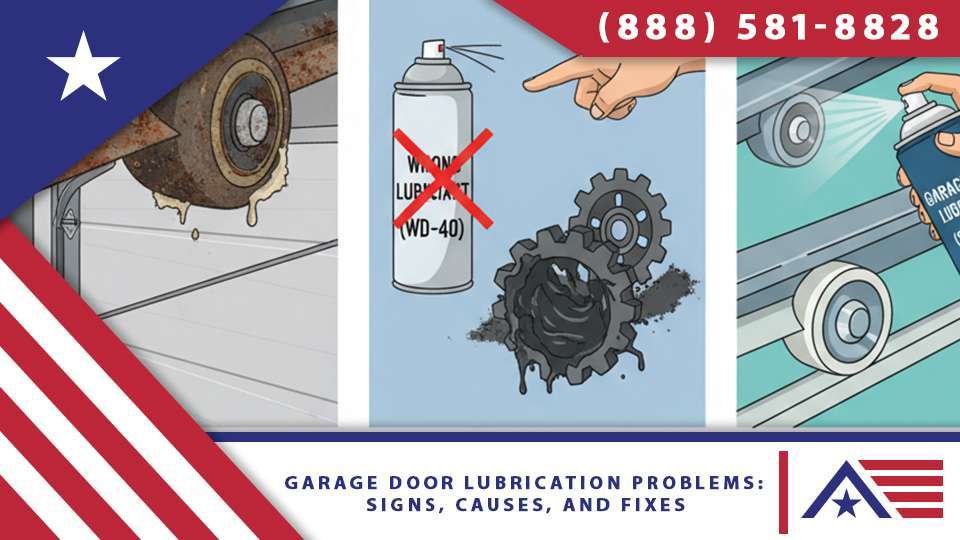
What NOT to use Never use WD-40 as a long-term garage door lubricant because it is a solvent and degreaser that strips existing lubrication and dries out quickly. Furthermore, avoid motor oil, vegetable oil, and general-purpose grease because they attract dirt and gum up moving parts. Moreover, the best lubricant for garage door components is always a product designed for metal-on-metal contact in outdoor conditions.
How to Lubricate a Garage Door Properly
Knowing how to lubricate a garage door saves you from professional service calls and keeps your system running quietly. Furthermore, following this garage door lubrication guide ensures every critical point gets attention.
1: Close the door and disconnect the opener First, close the door completely and pull the emergency release cord to prevent movement while you work near the springs and hardware.
2: Lubricate the torsion springs Next, spray white lithium grease along the entire length of each torsion spring to reduce coil-on-coil friction and prevent rust.
3: Lubricate the hinges Then, apply lubricant to the pivot point of each hinge where the pin meets the barrel to eliminate the squeaking at every panel joint.
4: Lubricate the rollers After the hinges, apply lubricant to the roller bearings but not the roller surface that contacts the track. Furthermore, nylon rollers need bearing lubrication just like steel rollers.
5: Lubricate the bearing plates and drums Apply lubricant to the bearing plates on both sides of the torsion bar and the cable drums where they contact the shaft.
6: Lubricate the lock and latch Finally, spray lubricant into the keyhole and latch mechanism if your door has a manual lock and cycle it several times to distribute internally.
7: Wipe the tracks clean Wipe the inside of the tracks with a clean cloth to remove dirt and old grease. However, do not lubricate the track surface because rollers need traction to function properly.
How Often to Lubricate Your Garage Door
Dry garage door parts develop problems quickly so consistent scheduling matters. Furthermore, an unlubricated garage door deteriorates faster during certain seasons and conditions.
Here is the recommended lubrication schedule:
- Perform full lubrication every six months at minimum
- Also, lubricate before winter to prevent cold weather binding and spring breakage
- Furthermore, lubricate after winter to remove moisture and prevent rust from spring thaw
- Apply additional lubrication if you notice new sounds between scheduled maintenance
- Additionally, lubricate immediately after any repair that involves removing or replacing hardware
- Increase frequency to every three months if your garage faces high humidity or salt air
Twice-yearly lubrication takes less than fifteen minutes and costs under five dollars for a can of lithium grease. Consequently, this simple maintenance prevents hundreds of dollars in premature component replacement.
When to Call a Professional for Garage Door Lubrication Problems Near You
Some lubrication problems indicate deeper mechanical issues that need professional attention. Therefore, contact a technician for garage door lubrication problems near you if any of the following apply:
- Grinding or scraping continues after thorough lubrication of all components
- Springs show visible rust, corrosion, or surface pitting
- Rollers wobble or have flat spots despite bearing lubrication
- The door binds at specific points even after lubricating everything
- You hear popping or snapping sounds from the spring or cable area
- The opener struggles despite a freshly lubricated door system
A garage door lubrication problems expert near you performs complete lubrication, identifies components that need replacement, and adjusts the system for smooth quiet operation. Specifically, they test balance, check roller condition, and verify spring tension after lubricating. In addition, they recommend a maintenance schedule based on your door’s age and usage patterns.
Do not let dry parts grind your garage door system into expensive failure. Instead, call today to schedule your lubrication service and keep your door running quietly for years.
Phone: (888) 581-8828
Email: info@us-garagedoorrepair.com
Website: https://www.us-garagedoorrepair.com/