Learn how essential garage door safety features protect your family and why regular inspections keep your system working properly.
Your garage door is the largest moving object in your home, and without proper garage door safety features, it poses serious risks to your family. Modern garage door safety systems include multiple layers of protection designed to prevent injuries and accidents. Understanding garage door safety sensors—also called garage door photo eyes—helps you recognize when these critical components need attention. The garage door auto-reverse mechanism, sometimes referred to as the garage door reversal system, stops the door and reverses direction when it contacts an obstruction. Scheduling a regular garage door safety inspection or garage door safety check ensures all protective features function correctly. If you’re concerned about your door’s safety performance, finding garage door safety service near you connects you with qualified technicians who can evaluate and repair your system.
Why Garage Door Safety Features Matter
Garage door safety features exist because garage doors can cause serious injuries. According to the U.S. Consumer Product Safety Commission, thousands of people are injured by garage doors annually, with children being particularly vulnerable.
The Weight Factor
A standard residential garage door weighs between 150-400 pounds. Without functioning garage door safety systems, this weight poses significant danger:
- Doors can crush objects, pets, or people beneath them
- Falling doors cause head injuries and broken bones
- Trapped fingers and hands result in serious lacerations
Federal Safety Requirements
Since 1993, federal law requires all garage door openers to include garage door safety sensors and garage door auto-reverse mechanisms. These garage door safety features have dramatically reduced injuries, making them essential for every home.
Garage Door Safety Sensors: Your First Line of Defense
Garage door safety sensors represent the most critical component of modern garage door safety systems. These small devices prevent the door from closing on people, pets, or objects.
How Garage Door Safety Sensors Work
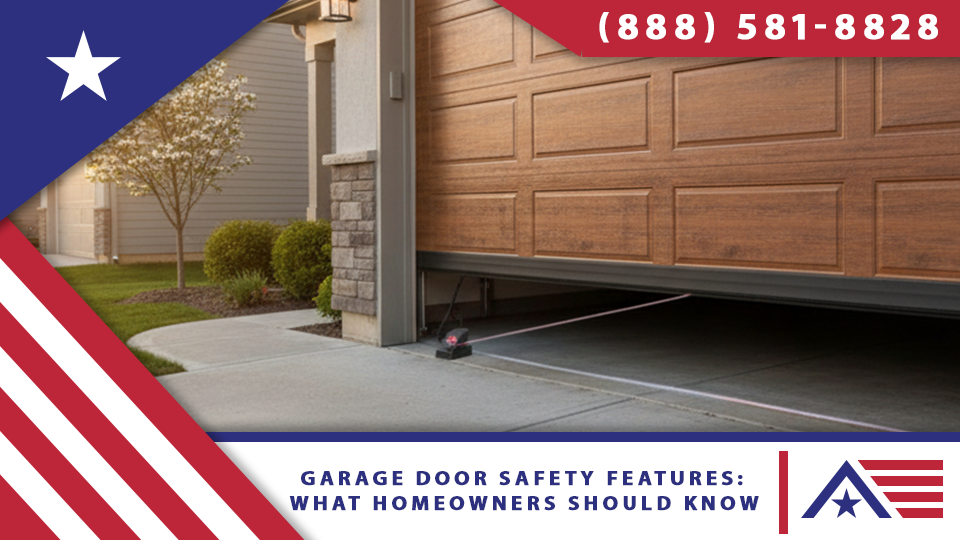
Garage door photo eyes consist of two units mounted on either side of the door opening, approximately six inches from the floor:
- Sending unit – Emits an invisible infrared beam across the opening
- Receiving unit – Detects the beam and signals the opener
- When broken – The door stops and reverses automatically
This simple but effective technology makes garage door safety sensors essential for every garage.
Signs Your Garage Door Photo Eyes Need Attention
Watch for these warning signs that your garage door photo eyes require service:
- Door reverses immediately after starting to close
- Door won’t close at all using the wall button
- Sensor lights blink or appear dim
- Door closes only when holding the wall button continuously
- Inconsistent operation in bright sunlight
Common Garage Door Safety Sensor Problems
Garage door safety sensors can malfunction due to:
- Misalignment – Sensors knocked out of position
- Dirty lenses – Dust, cobwebs, or debris blocking the beam
- Sun interference – Direct sunlight overwhelming the receiver
- Wiring issues – Damaged or loose connections
- Failed components – Sensors reaching end of lifespan
Regular cleaning and alignment checks keep your garage door photo eyes functioning properly as part of routine maintenance.
Garage Door Auto-Reverse: Essential Protection
The garage door auto-reverse mechanism provides critical backup protection when garage door safety sensors fail or don’t detect an obstruction.
How Garage Door Auto-Reverse Works
The garage door reversal system uses force sensitivity to detect obstructions:
- The opener monitors resistance during door travel
- When the door contacts an object, resistance increases
- The system triggers immediate reversal
- The door returns to the fully open position
This garage door auto-reverse feature has saved countless injuries since becoming mandatory in 1993.
Testing Your Garage Door Reversal System
Test your garage door auto-reverse monthly using this simple procedure:
- Place a 2×4 board flat on the ground beneath the door
- Press the close button on your remote or wall control
- The door should reverse immediately upon contacting the board
- If it doesn’t reverse, your garage door reversal system needs professional adjustment
Adjusting Garage Door Auto-Reverse Sensitivity
The garage door auto-reverse sensitivity can be adjusted, but improper settings create hazards:
- Too sensitive – Door reverses without contacting anything
- Not sensitive enough – Door fails to reverse on contact
- Proper setting – Reverses upon light contact with obstruction
Professional technicians calibrate garage door safety systems to manufacturer specifications during a garage door safety inspection.
Additional Garage Door Safety Features
Beyond sensors and auto-reverse, modern garage door safety systems include several additional protective features.
Manual Release Mechanism
Every garage door opener includes an emergency release:
- Red handle hanging from the opener track
- Disconnects door from opener for manual operation
- Essential during power outages or opener failures
- Part of comprehensive garage door safety features
Rolling Code Technology
Modern openers use rolling code technology for security:
- Remote signal changes with each use
- Prevents code theft and unauthorized access
- Protects against break-ins
- Standard in newer garage door safety systems
Battery Backup Systems
Battery backup ensures operation during power outages:
- Door continues functioning when power fails
- Prevents entrapment in garage during emergencies
- Valuable addition to existing garage door safety features
- Recommended for homes in areas with frequent outages
Timer-to-Close Feature
Automatic closing after a set period:
- Door closes automatically if left open
- Prevents security vulnerabilities from forgotten doors
- Includes warning signals before closing
- Enhances overall garage door safety systems
Garage Door Safety Inspection: What’s Included
A professional garage door safety inspection evaluates all protective components and identifies potential hazards before they cause injuries.
Components Checked During a Garage Door Safety Check
A thorough garage door safety check includes:
Sensor Evaluation
- Garage door photo eyes alignment verification
- Lens cleaning and inspection
- Wiring and connection testing
- Response time measurement
Auto-Reverse Testing
- Garage door reversal system force testing
- Sensitivity adjustment verification
- Contact reverse functionality
- Obstruction detection confirmation
Hardware Inspection
- Spring condition and tension
- Cable integrity and wear
- Track alignment and security
- Roller and hinge condition
Opener Assessment
- Motor function and noise levels
- Drive mechanism condition
- Safety feature integration
- Remote and wall control operation
How Often to Schedule a Garage Door Safety Inspection
Experts recommend a garage door safety check at these intervals:
| Situation | Recommended Frequency |
|---|---|
| Standard residential use | Annually |
| Heavy daily use | Every 6 months |
| After any malfunction | Immediately |
| New home purchase | Before moving in |
| Homes with young children | Every 6 months |
Regular garage door safety inspection visits catch problems early and maintain reliable protection.
DIY Garage Door Safety Checks
Between professional garage door safety inspection visits, perform these monthly checks to verify your garage door safety features work properly.
Monthly Safety Checklist
Test Garage Door Safety Sensors
- Start closing the door using the wall button
- Wave a broom handle through the sensor beam
- Door should stop and reverse immediately
- If not, clean garage door photo eyes and retest
Test Garage Door Auto-Reverse
- Place a 2×4 flat under the door center
- Close the door using the remote
- Door should reverse upon contact
- If not, schedule professional service for your garage door reversal system
Visual Inspection
- Check sensor lights (typically green when aligned)
- Look for damaged wires or loose connections
- Inspect springs for gaps or rust
- Examine cables for fraying
Balance Test
- Disconnect opener using emergency release
- Lift door manually to waist height
- Release carefully—door should stay in place
- If it falls or rises, springs need professional adjustment
When DIY Checks Reveal Problems
If your monthly checks reveal issues with garage door safety features, contact a professional immediately. Never attempt to:
- Adjust or repair springs yourself
- Bypass garage door safety sensors
- Disable garage door auto-reverse mechanisms
- Modify any garage door safety systems
These actions create serious injury risks and may violate local building codes.
Warning Signs Your Garage Door Safety Systems Need Service
Beyond failed tests, watch for these indicators that your garage door safety features require professional attention.
Sensor Warning Signs
Your garage door safety sensors may need service when:
- Indicator lights flash continuously
- One sensor light stays off
- Door behaves erratically during closing
- Sensors appear physically damaged
Auto-Reverse Warning Signs
Your garage door auto-reverse may need adjustment when:
- Door hesitates before reversing
- Excessive force required to trigger reversal
- Door doesn’t fully reverse after contact
- Inconsistent reversal behavior
General Safety Concerns
Schedule a garage door safety check immediately if you notice:
- Unusual sounds during operation
- Door moves unevenly or jerks
- Visible cable damage or fraying
- Springs appear stretched or broken
- Any component looks damaged
Garage Door Safety Service Near You: When to Call
While monthly testing maintains awareness, professional garage door safety service near you provides expert evaluation and repair of all garage door safety features.
Benefits of Professional Garage Door Safety Inspection
Technicians offering garage door safety service near you provide:
- Expert diagnosis of all garage door safety systems
- Proper calibration of garage door auto-reverse sensitivity
- Professional alignment of garage door photo eyes
- Safe handling of high-tension springs and cables
- Comprehensive evaluation beyond basic safety components
- Documentation for insurance and real estate purposes
What to Expect from Garage Door Safety Service Near You
When scheduling garage door safety service near you, expect:
- Complete evaluation of all garage door safety features
- Testing of garage door safety sensors and garage door reversal system
- Detailed report of findings and recommendations
- Upfront pricing for any needed repairs
- Professional repairs completed on-site when possible
- Verification testing after all work completed
Choosing a Qualified Safety Inspector
Look for these qualifications when seeking garage door safety service near you:
- Licensed and insured technicians
- Experience with your opener brand
- Positive customer reviews
- Written estimates before work begins
- Warranty on parts and labor
Teaching Garage Door Safety to Children
Garage door safety features protect against accidents, but education adds another layer of protection for families with children.
Essential Rules for Kids
Teach children these garage door safety rules:
- Never run under a moving garage door
- Never play with remotes or wall buttons
- Stay away from door tracks and springs
- Tell an adult if the door acts strangely
- Never touch the emergency release handle
Adult Responsibilities
Parents should also follow these practices:
- Keep remotes out of children’s reach
- Supervise children near garage doors
- Maintain all garage door safety systems properly
- Schedule regular garage door safety inspection visits
- Test garage door safety features monthly
Final Thoughts on Garage Door Safety Features
Garage door safety features protect your family from serious injuries caused by the heaviest moving object in your home. Modern garage door safety systems include multiple protective layers, from garage door safety sensors and garage door photo eyes to the garage door auto-reverse and garage door reversal system that stops and reverses the door upon contact.
Regular garage door safety inspection visits and monthly garage door safety check routines ensure all components function correctly. When tests reveal problems or warning signs appear, finding qualified garage door safety service near you connects you with professionals who can restore full protection.
Don’t compromise on garage door safety. Test your garage door safety features monthly, schedule annual professional inspections, and address any concerns immediately. Your family’s safety depends on properly functioning garage door safety systems.
Phone: (888) 581-8828
Email: info@us-garagedoorrepair.com
Website: https://www.us-garagedoorrepair.com/